
Introduction
Maintaining healthy vision requires daily conscious choices. Eye care isn’t just about seeing clearly—it’s about preventing age-related vision loss, reducing digital strain, and protecting your sight for decades to come. This guide covers the critical dos and don’ts that eye health professionals recommend to preserve your vision naturally.
Eye Care Dos: Build Healthy Vision Habits
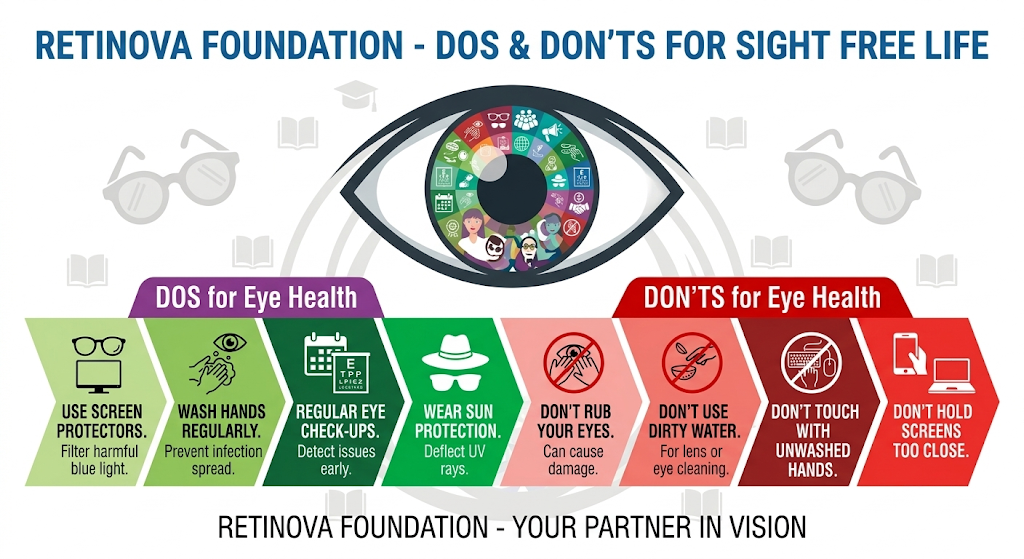
Do get regular eye examinations. Schedule comprehensive eye exams every 1-2 years, even if your vision feels perfect. Early detection of glaucoma, cataracts, and macular degeneration prevents permanent sight loss. Many eye conditions develop without symptoms.
Do protect eyes from UV damage. Wear sunglasses that block 99-100% of UVA and UVB rays whenever outdoors. UV exposure accelerates cataracts and increases age-related macular degeneration risk. Quality sunglasses are non-negotiable eye care.
Do follow the 20-20-20 rule. Every 20 minutes of screen time, look at something 20 feet away for 20 seconds. This reduces digital eye strain, prevents accommodation fatigue, and maintains natural focusing ability. It’s the simplest professional eye care recommendation.
Do maintain proper screen distance. Keep monitors 20-26 inches from your eyes at arm’s length. Position screens slightly below eye level. Proper ergonomics reduce eye fatigue, dry eyes, and headaches associated with prolonged computer use.
Do eat eye-healthy foods. Lutein, zeaxanthin, omega-3s, and vitamins C and E protect vision. Incorporate leafy greens, fatty fish, nuts, and colorful vegetables. Nutritional eye care prevents oxidative damage and age-related vision decline.
Do stay hydrated. Drink adequate water daily. Dehydration worsens dry eye syndrome, a common cause of vision discomfort and temporary blur. Hydration supports tear production naturally.
Eye Care Don’ts: Avoid Vision-Damaging Habits
Don’t ignore eye discomfort. Persistent redness, pain, discharge, or vision changes require immediate professional evaluation. Delayed treatment of infections, injuries, or inflammatory conditions risks permanent damage.
Don’t skip eye drops for dry eyes. Chronic dryness damages the cornea and reduces visual clarity. Use preservative-free eye drops regularly if you experience dryness, especially with screen use or contact lenses.
Don’t touch your eyes unnecessarily. Your hands carry bacteria and irritants. Frequent eye touching spreads infections, triggers inflammation, and increases allergy symptoms. Wash hands before handling contact lenses.
Don’t overwear contact lenses. Extended wear beyond recommended schedules increases infection risk and reduces oxygen to the cornea. Follow lens replacement schedules strictly. Rest eyes with glasses periodically.
Don’t expose eyes to smoke or harsh chemicals. Cigarette smoke accelerates macular degeneration and cataracts. Workplace chemicals require proper eye protection and ventilation.
Don’t neglect sleep and rest. Eyes repair during sleep. Insufficient sleep worsens dry eyes, reduces visual focus, and impairs eye health. Aim for 7-9 hours nightly.
FAQ: Eye Care Questions Answered
Q: How often should I see an eye doctor?
A: Annual exams for adults; every 1-2 years for those over 40 or with risk factors.
Q: Are blue light glasses necessary?
A: Screen breaks and proper distance matter more than specialized lenses for most people.
Q: Can eye exercises improve vision naturally?
A: Focusing exercises help strain relief but cannot correct refractive errors